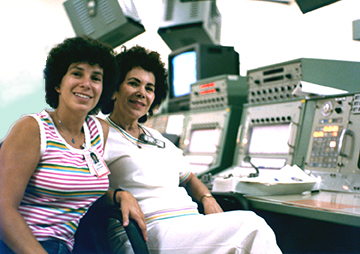
In 1984, my Princeton work ended but I found a new adventure. I found a job listed in an aerospace magazine and, unknowingly, pestered the manager. I impressed him flew down to Houston for the interview. Soon I was on a team at NASA’s Johnson Space Center developing software for Mission Control for Space shuttle flight controllers. It was also the introduction of computers in the workflow.
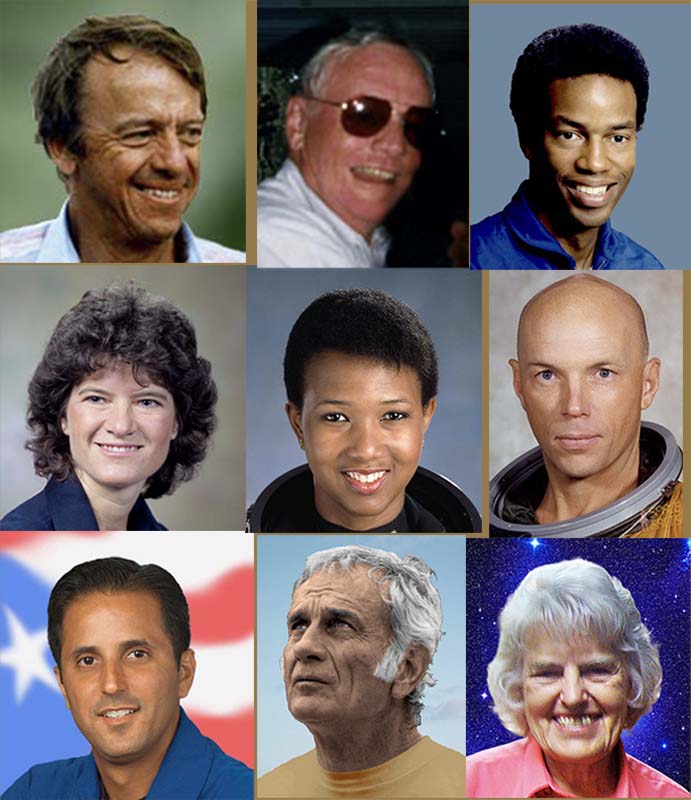
Astronauts from all NASA programs — Mercury, Gemini, Apollo, and Space Shuttle — attended many NASA events and many lived in my neighborhood. I met many of the astronaut firsts: the first American in space (1961), first woman (1983), the first African-American man (1983) and woman (1992), Puerto Rican astronaut and Educator Astronaut (2009). In 1994, I was a classmate with a Hubble repair astronaut. 1999 was the thirtieth anniversary of Apollo 11 and I shook hands with Neil Armstrong (1969). That’s just naming a few!
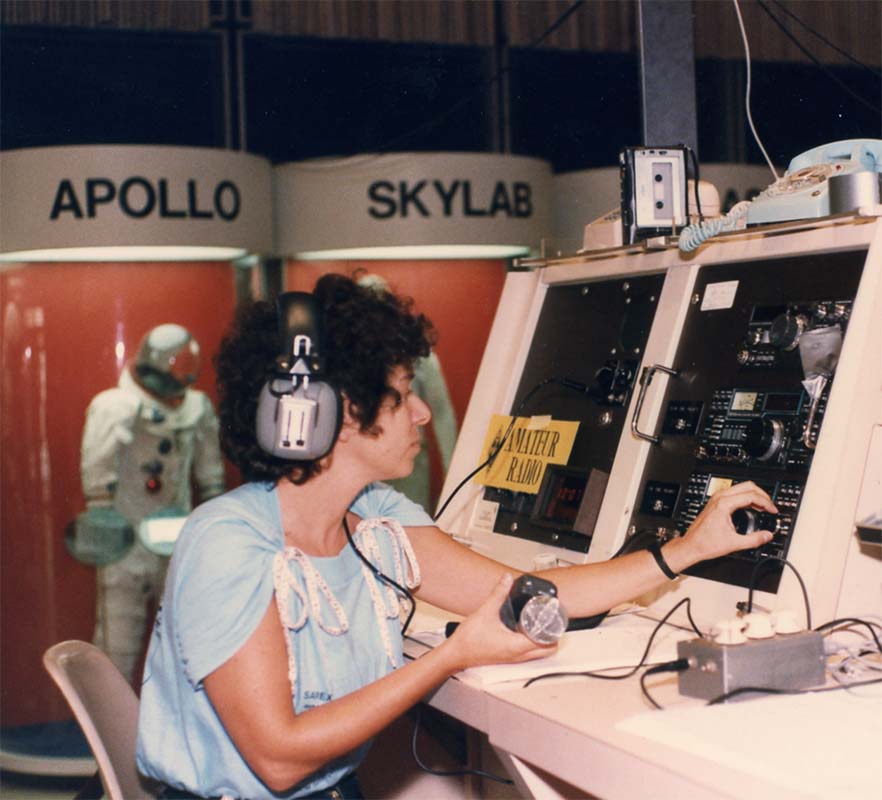
I earned my novice license (call sign KA5UKJ) in 1984. The following year I joined the historic Shuttle Amateur Radio Experiment (SAREX) project. It was the first two-way video communication between Earth and the Space Shuttle. I wrote computer code for the antenna to track the shuttle as it passed overhead. I also handled video equipment and called up to the shuttle — no answer for me.

In January of 1986, I began a graduate program in Studies of the Futures. It is the systematic, interdisciplinary and holistic study of social and technological advancement, and other environmental trends, often for the purpose of exploring how people will live and work in the future. We had only one class of Man’s Future in Space when the Challenger tragedy ocurred.
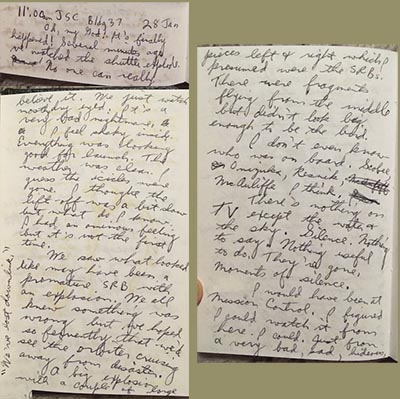
I was on-site at NASA-JSC on January 28, 1986 in a room with civil servants and contractors eager to watch the launch of the first Teacher in Space — Christa McAuliffe. As I wrote in my journal, I recorded the tragedy that no one expected: ”…we hoped so fervently that we’d see the orbiter cruising away from disaster.” Understandably, we were horrified and traumatized.
Immediately after completing my Master’s degree, I joined a NASA contractor team researching lessons learned from past missions to create a Human Factors operational database for future long-term space missions. I developed a process to collect data during Shuttle missions in the Mission Evaluation Room (MER) and received recognition for my contributions.
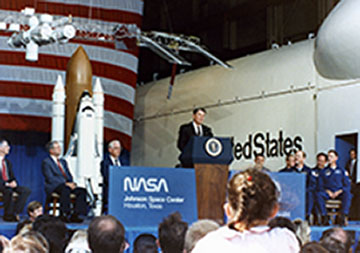
My Human Factors work coincided with the Space Shuttle’s return to flight in 1988. President Ronald Reagan came to NASA-JSC to meet with the STS-26 crew. The mission successfully validated the safety improvements after Challenger.
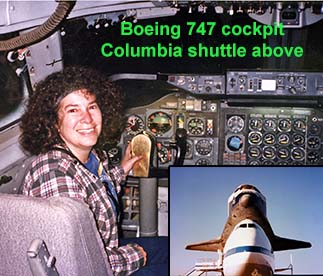
Occasionally, a Space Shuttle would land at nearby Ellington Airport for the public to see up close. This time when I told the staff I was a pilot, I was invited to sit in the 747 cockpit!
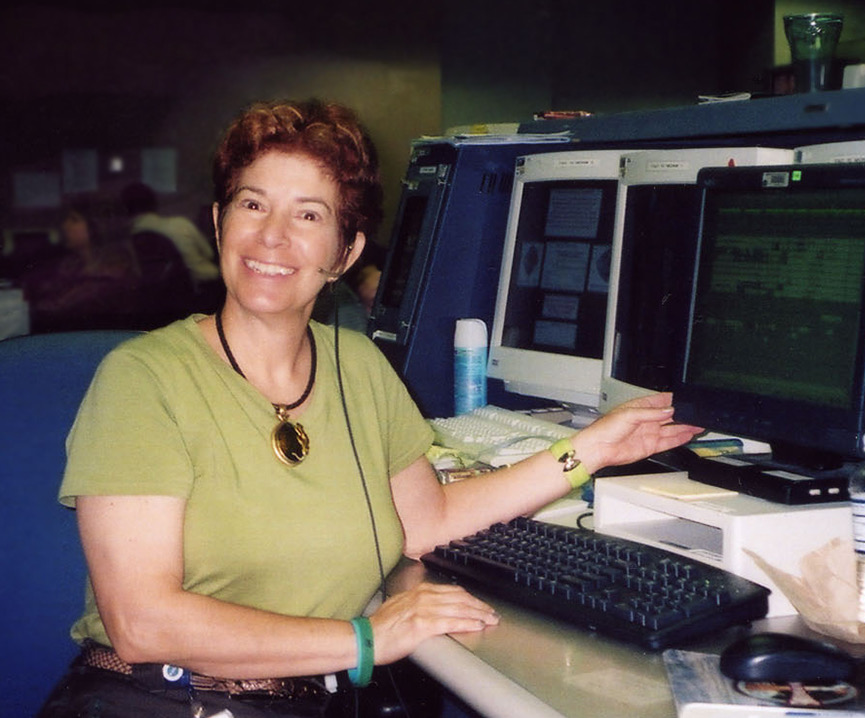
In 2001, I joined the International Space Station (ISS) team. By now, computers were integrated in all areas of space operations. It was exciting to be part of the very early years of its construction. I soon earned my first flight controller certification — perhaps the first Puerto Rican female flight controller.
 Engineer Torres